

Silent engineering vs. permanent disruption
The other day, while flipping through one of my favorite books — Animal Architecture, by Ingo Arndt — I found myself once again amazed by something that never stops surprising me: the ability of certain animals to build structures of extraordinary complexity and ecological efficiency — a form of natural architecture that has existed long before we arrived.
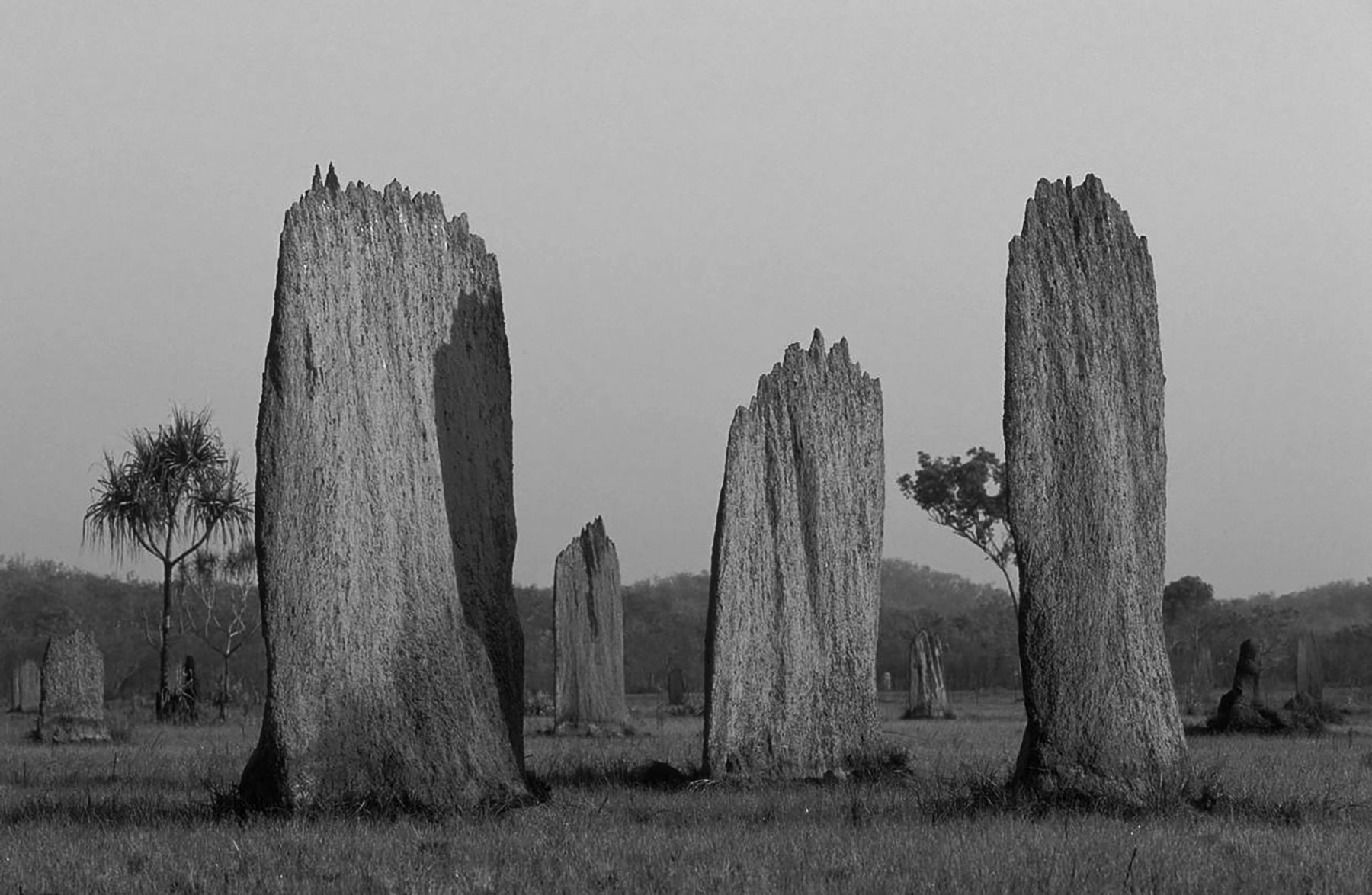
Take the termite towers in northern Australia. Structures rising more than three meters high, always oriented precisely north–south, capable of maintaining a stable interior temperature in an extreme climate. Pure climatic architecture — an expression of natural architecture — without drawings, without calculations, without renders.
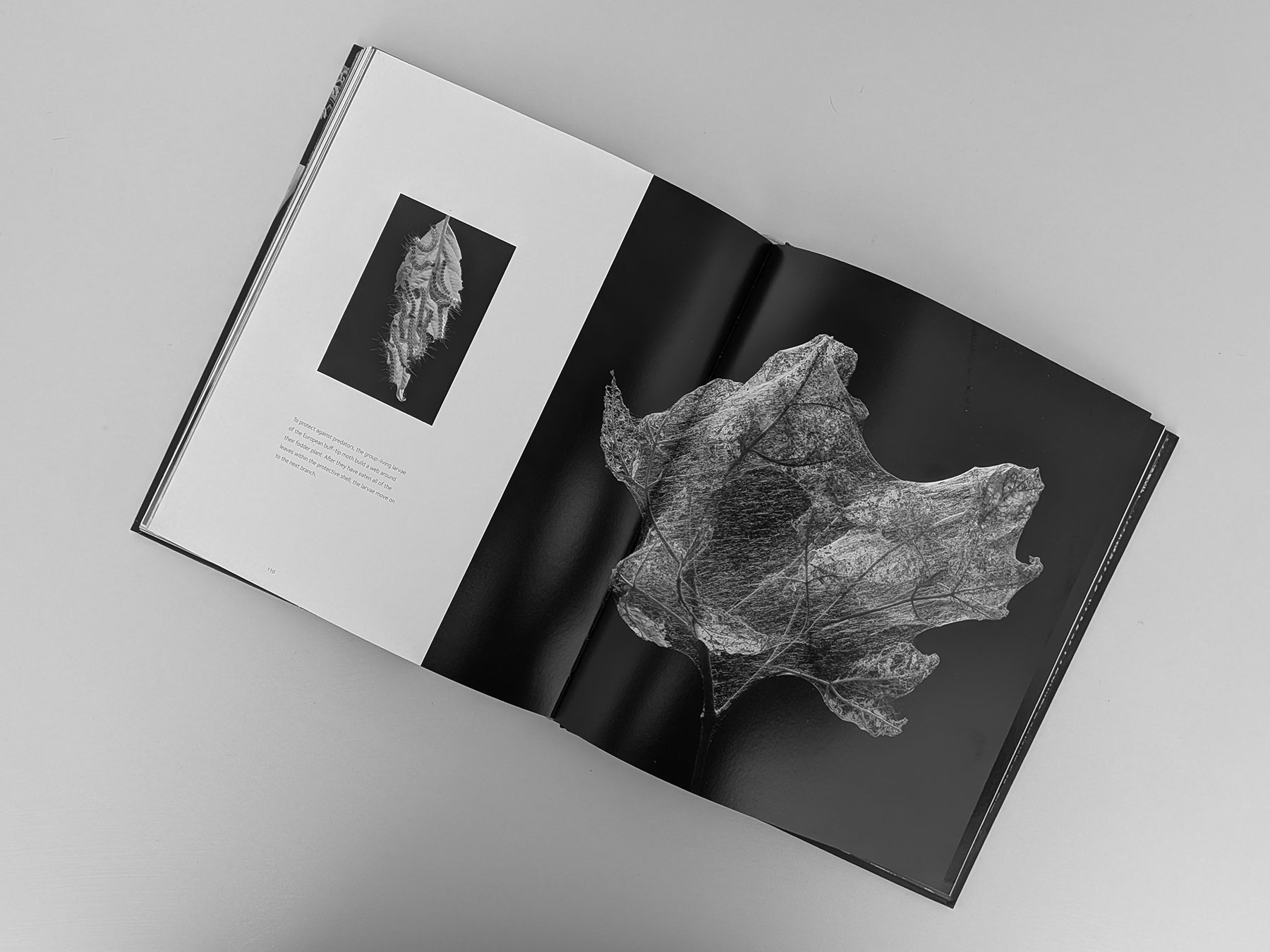
Or the delicate membranes built by certain larvae over the leaves where they live. Small architectures of camouflage and protection. And at the same time, systems that regulate the forest: they eat leaves, allow more light to reach the understory, transform biomass into nutrients that return to the soil. Neither villains nor heroes. Simply architects of ecosystem metabolism.
And then an inevitable idea appears:
What matters is not only what these organisms build,
but how their very existence improves the system they belong to.
Natural architecture that improves the system
Because larvae have no eyes.
No complex brain.
They do not design, plan, or “innovate”.
And yet, for millions of years, they have been doing something we still struggle to fully understand:
modifying their environment as they live within it — without exhausting it.
They do not extract in order to leave.
Nor do they deplete in order to grow.
No void is left behind.
They feed, transform, move on…
and the soil becomes more alive after their passage.
If we think about it calmly, this is already a form of engineering.
Silent. Slow. Unspectacular.
But deeply effective.
When building becomes extraction
Our recent construction history — especially over the last hundred years — resembles a mine far more than these living architectures. We extract, remove, compact, seal. We take materials, energy, water. We build fast, occupy, and move on, rarely pausing to consider the consequences our decisions have on territory and natural systems.
The problem is not building.
The problem is how we build.
In architecture and urban development we speak often about sustainability, efficiency, green technologies. But we rarely pause on something more uncomfortable — and at the same time more fundamental:
to ask whether our construction methods are extractive or, in some way, regenerative.
What is an extractive method?
One that takes more from its source than it returns.
One that constantly depends on external systems to sustain itself.
One that leaves the territory more fragile than it was at the beginning of its intervention.
They are easy to recognize. In fact, they are the most common ways we have built for decades: concrete that seals the ground, excessive earthmoving, infrastructure that interrupts natural cycles, buildings that require constant energy simply to function.
The soil stops breathing.
Water can no longer infiltrate.
Subterranean life disappears.
And then we act surprised by erosion, flooding, excessive heat, loss of fertility.
Another way of inhabiting the territory
A regenerative method, by contrast, is not necessarily more complex nor more technological. Often it is the opposite. It first asks how a place works before intervening. It seeks to work with climate, gravity, water cycles and soil — as we explore in 3muros, a project where rammed earth and landscape organize the territory and respond to its context. It tries, like these small living architectures, not to leave behind an open wound.
This is not about idealizing nature nor romanticizing the past. It is about observing with humility. Accepting that living systems have been solving problems for millions of years that we still try to solve through force, energy and control.
Perhaps the real conflict is not between the “natural” and the “artificial”, but between two ways of relating to territory:
one that extracts and leaves,
and another that inhabits, transforms, and leaves something better behind.
And so it becomes worth pausing for a moment to ask:
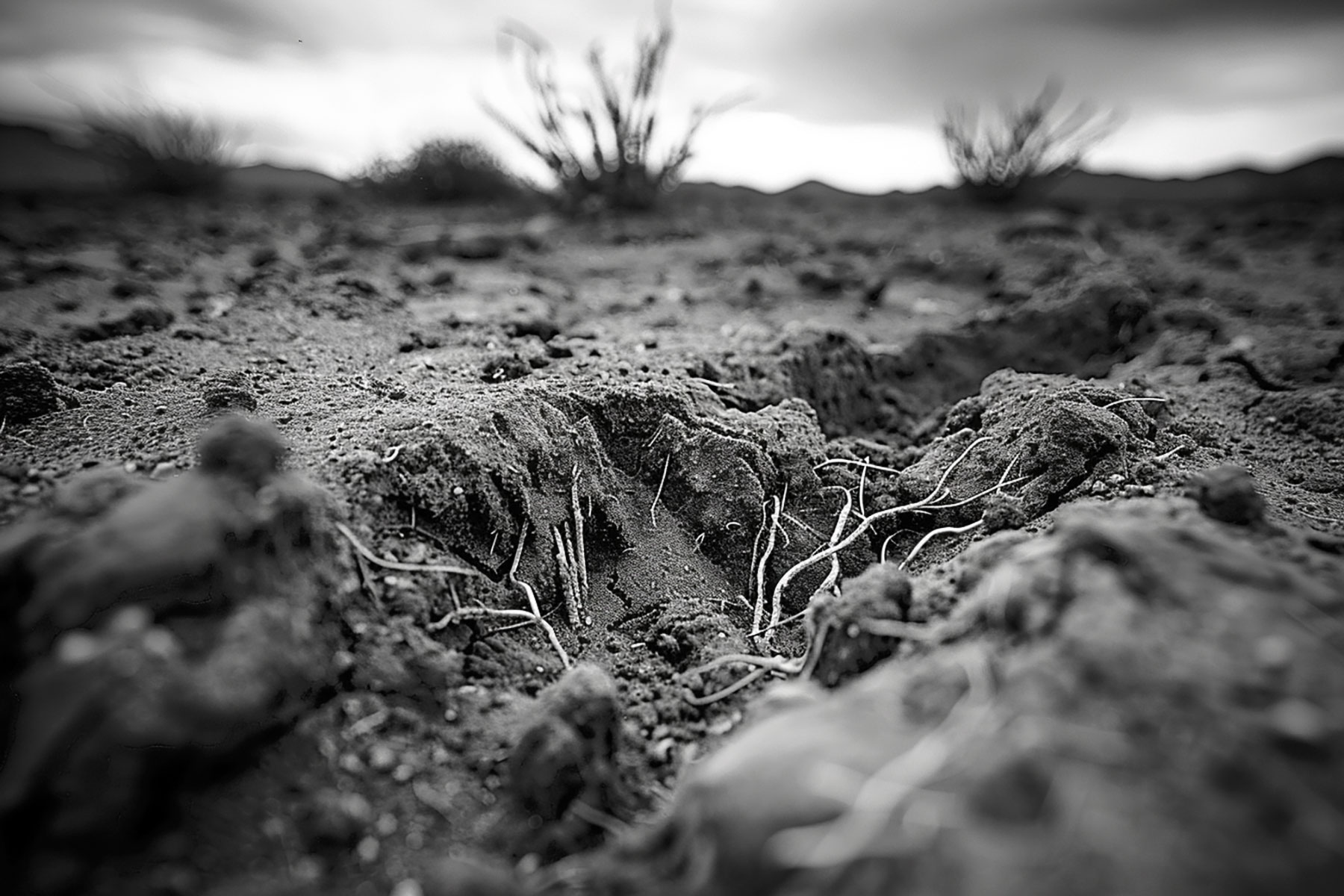
Do you observe the ground you walk on?
The natural environment that surrounds you?
What do you see in it?
And what might we learn if we began to look more carefully?